
The history of Christmas is far longer, richer, and more layered than we usually imagine. Before December 25th became celebrated as the birth of Jesus Christ, this period was connected with winter solstice festivities — a symbolic return of light and hope. Only later did Christianity add its spiritual meaning, creating the foundation of Christmas as we know it today. A blend of pagan rituals, folk customs, and Christian symbolism shaped a holiday that continues to this day, including how Christmas is celebrated in the Czech Republic.
Pagan roots and the history of Christmas: when people celebrated the return of the sun
Long before the arrival of Christianity, people across Europe celebrated the winter solstice — the longest night of the year, marking the moment when daylight slowly begins to grow again. For ancient cultures, it represented hope, renewal, and gratitude for surviving the harshest time of year.
So how were the “winter holidays” — the early form of Christmas — celebrated in pagan times? Each culture had its own rituals, but fire, feasting, gift-giving, and protective ceremonies were almost always present. People across Europe celebrated the solstice in various ways, but the symbolism of light returning after darkness remained constant.
In Scandinavia, the Yule festival lasted up to twelve days. People lit large wooden logs, decorated their homes with evergreen branches, and honored deities of fertility and the sun.
The Slavs celebrated Koleda — a festival filled with masks, singing, and rituals meant to protect households from dark forces.
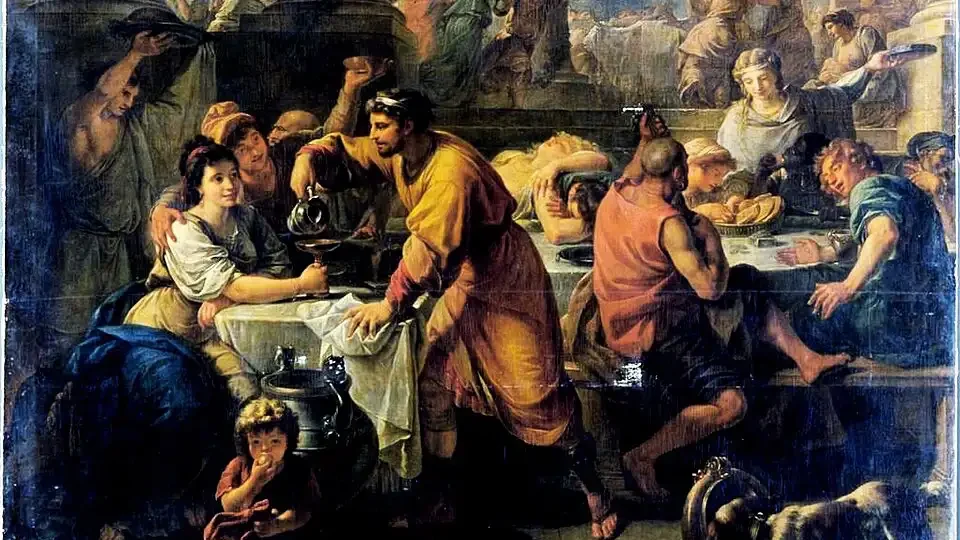
The Romans celebrated Saturnalia, joyful festivities dedicated to Saturn, the god of agriculture, culminating on December 25th. During these days, social hierarchy was temporarily dissolved, gifts were exchanged, and people of all classes celebrated together — even masters with their slaves.
Many modern Christmas customs originate from these ancient celebrations. Later, Christmas adapted to Christian tradition, but its roots reach far back into a time when people welcomed the return of the sun.
The Christian origin of Christmas: how early Christians shaped the holiday
While pagan cultures celebrated the solstice as the return of the sun, Christians gave this period a new spiritual meaning. Christmas was not originally celebrated in early Christianity — Easter, commemorating Jesus’s death and resurrection, was considered the central feast. It was not until the 4th century that December 25th was established as the date of Christ’s birth.
The exact date of Jesus’s birth is not mentioned in the Gospels. Theologians began deriving it from the Feast of the Annunciation (March 25th), which symbolically marked the date of conception — nine months before December 25th.
This positioned Christ’s birth at a time when days grow longer and light overcomes darkness in nature.
Jesus is described in the Gospels as the “light of the world.” Christmas also became linked with the Roman festival Dies Natalis Solis Invicti — the “Birthday of the Unconquered Sun.” Established by Emperor Aurelian in 274 CE, the feast symbolized the rebirth of the sun and the return of longer days after the solstice. It soon became an important part of late Roman religious life.
Christians later gave this widely known date a new meaning — instead of the rebirth of the sun, it became the celebration of the birth of the Son of God.
The main Christian feast day is Christmas Day (December 25th), while Christmas Eve (December 24th) serves as a vigil — a day of spiritual preparation. Although not an official church feast, it has become the central moment of family celebrations in many countries.
Christmas has a long and rich history that has transformed over centuries. If stories like this fascinate you and you’d like to experience the past from a new perspective, visit Back in Time Prague. You’ll walk through centuries of history brought to life through immersive storytelling and cutting-edge technology.
You can find Back in Time Prague on the 6th floor of the Máj – House of Fun entertainment and shopping center. In our next article, we’ll explore the history of Christmas through the traditions and customs that have survived to this day.